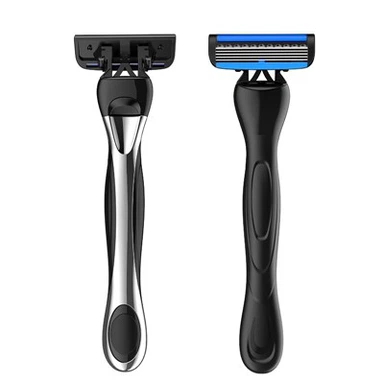
Manual Razors: A Renewed Choice for Quality-Conscious Consumers
Mar 13, 2026
Why have manual razors managed to stage a resurgence-defying the "onslaught of convenience" posed by electric shavers? The core reason lies in their irreplaceable shaving experience and their symbolic status as a mark of quality. On one hand, by allowing physical blades to make precise contact with the skin, manual razors achieve a more thorough shave, avoiding common issues associated with electric shavers-such as "stubble residue" or "tugging and stinging." On the other hand, for men who value the rituals of daily life, the act of manual shaving feels more like a moment of "self-care"; from applying the lather to executing a precise shave, every step embodies a pursuit of a refined lifestyle.
Industry analysts point out that the resurgence of manual razors is, in essence, a manifestation of the "quality-first" philosophy driven by consumer upgrading. Modern men are no longer satisfied with merely achieving a "quick shave"; instead, they prioritize the comfort of the shaving process, skin-friendliness, and the craftsmanship inherent in the product itself. This trend is also driving the manual razor market toward advancements in "technological innovation," "material optimization," and "user-centric design."
Choosing a Manual Razor: Don't Overlook These Key Dimensions
Faced with the dazzling array of manual razors on the market, how can the average consumer determine "which men's razor is best"? To select a high-quality product that truly meets your specific needs, consider the following four core dimensions:
1. Blade Material: The Core Guarantee of Sharpness and Durability
The blade is the soul of a manual razor; a high-quality blade must possess both exceptional sharpness and strong corrosion resistance. Currently, most mainstream high-end manual razors utilize medical-grade stainless steel or carbon steel. These materials undergo specialized polishing processes to ensure a smooth glide during shaving while simultaneously minimizing friction and irritation to the skin.
2. Razor Head Design: The Key to Contouring and Safety
The structural design of the razor head directly impacts the shaving experience. An ideal razor head should feature a flexible pivoting mechanism that adapts to facial contours (such as the chin and the sides of the nose). Additionally, it should be equipped with protective guards or lubricating strips to reduce stinging sensations and the risk of redness during shaving-making it an especially suitable choice for individuals with sensitive skin.
3. Grip Comfort: The Foundation of Handling
A razor's handle design must be ergonomic, featuring a balanced weight and excellent slip resistance to ensure stable control during shaving-thereby preventing nicks and cuts caused by a slipping grip. Furthermore, the tactile quality of the handle's material significantly contributes to the overall user experience.
4. Brand Heritage: A Guarantee of Quality and After-Sales Support
Crafting manual razors involves a high technical threshold; consequently, century-old brands often possess more mature manufacturing technologies and robust quality control systems. Opting for a brand with an impeccable reputation not only secures a superior product but also ensures access to comprehensive after-sales support, sparing you the inconvenience and frustration that can arise from product quality issues.