

Global Manual Razor Market Outlook: Why Razor Manufacturing Capability Matters More Than Ever
Mar 04, 2026
For years, the manual razor industry has often been labeled as "mature" or even "declining," largely due to the visibility of electric shavers and changing grooming narratives. However, market data and on-the-ground sourcing behavior tell a very different story.
The global manual razor market reached approximately USD 11.6 billion in 2025 and is projected to grow steadily toward USD 14 billion by 2030, with a CAGR of around 3.8%. This is not a shrinking category-it is a restructured one.
What is changing is not demand, but how value is created.
From Products to Systems: The Core Industry Shift
Manual razors are no longer competing as standalone products. They are competing as systems.
Across global markets, growth is increasingly driven by:
Multi-blade cartridge razor platforms
Refill-based and long-life systems
Enhanced skin protection features (lubrication strips, guards, microfins)
Material upgrades such as metal handles and precision-molded components
Rapid expansion of women's and body hair removal segments
As a result, value growth now consistently outpaces volume growth. In many regions, brands are selling fewer units - but at higher margins.
This shift places manufacturing capability back at the center of competition.
Regional Markets Are Evolving in Different Directions
Asia-Pacific has become both the largest and fastest-growing region. Consumers are moving quickly from basic formats to 3-blade and cartridge razors, while women's grooming tools and compact systems are scaling rapidly. For any OEM razor manufacturer, APAC demands cost efficiency without sacrificing visible innovation.
The Middle East is a value-driven market. Countries such as Saudi Arabia and the UAE show strong preference for premium cartridge razors, refined finishes, and stable supply. Here, manufacturing quality is directly perceived by the end consumer, and supplier credibility matters as much as brand positioning.
In Europe, sustainability is no longer a trend - it is a sourcing requirement. Disposable formats face increasing pressure, while refill systems and reduced-plastic designs are becoming standard in private label programs. Razor manufacturers are now expected to co-develop systems, not simply supply them.
The United States, while mature, remains the most profitable national market. Growth is driven by innovation-led premium products and subscription-based replenishment models. Differentiation depends less on distribution and more on technical performance and system compatibility.
Why Manufacturing Capability Matters Again
One of the most underestimated changes in the manual razor market is this:
Manufacturing depth is becoming a strategic advantage again.
As razor systems grow more complex, brands are rethinking:
Who controls blade grinding and coating processes
How flexible cartridge platforms really are
Whether customization creates cost - or margin
How quickly suppliers can support iteration and market testing
In this environment, not all razor manufacturers are interchangeable. Brands increasingly seek partners who understand blade physics, system architecture, and long-term compatibility, not just assembly.
The Role of OEM and Private Label Razor Manufacturers
OEM and private label programs continue to grow globally, driven by:
Retailer brand expansion
Emerging grooming brands
Faster product launch cycles
But success in private label razors today requires more than price competitiveness. It requires:
Stable blade manufacturing capability
Consistent multi-blade performance
Scalable quality control
Customization across head structure, lubrication systems, handles, and packaging
The right razor manufacturer enables brand differentiation rather than limiting it.
Where KAILI Fits into the Global Razor Market
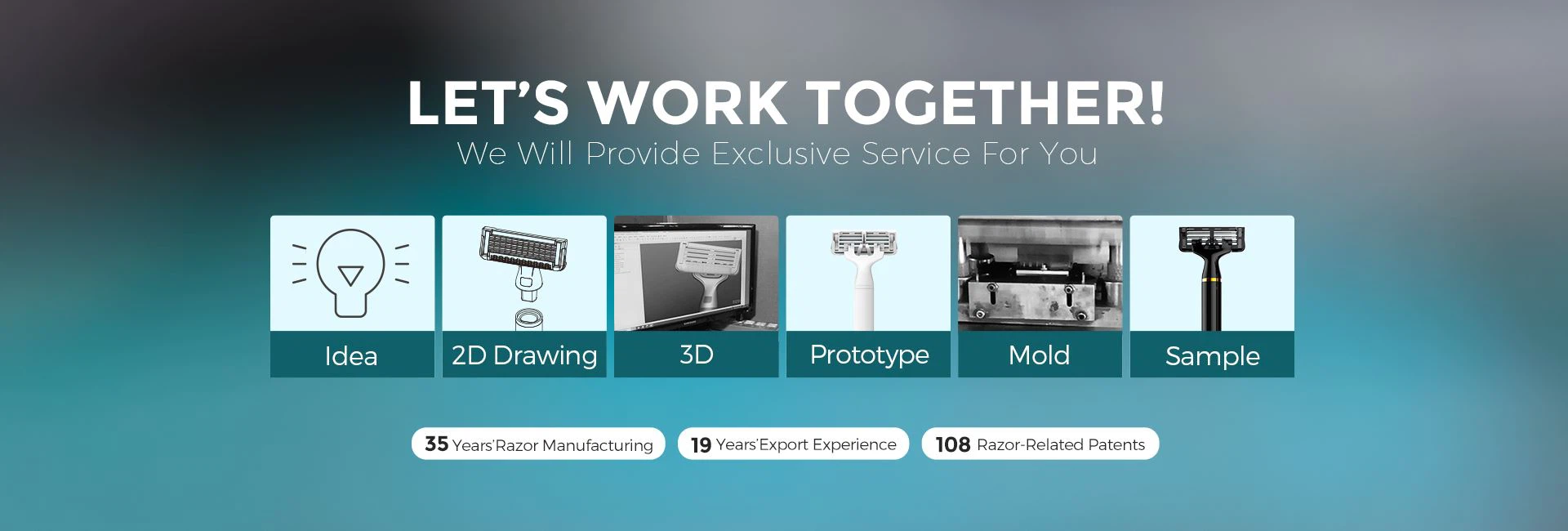
KAILI is a professional razor manufacturer with more than 37 years of specialization in blade manufacturing and manual razor systems.
From cartridge razors to customized grooming solutions, KAILI supports global B2B partners through:
Integrated blade manufacturing and cartridge assembly
Advanced multi-blade system engineering
Flexible OEM and private label razor development
Customization across blade structure, head design, handles, and packaging
Proven export experience across Europe, North America, Asia, the Middle East, and emerging markets
In a market where manual razors are no longer commodities, manufacturing capability defines brand freedom.
Final Thought
The global manual razor market is not disappearing - it is becoming more selective.
Brands that understand systems, manufacturing depth, and regional expectations will continue to grow. Those that rely solely on surface-level differentiation will struggle to protect margins.
In the next phase of the industry, the right razor manufacturer is not just a supplier - but a competitive advantage.
KAILI - Razor Manufacturing & Custom Grooming Solutions for Global Brands.


